
Security Advisory
Someone has to own "prove it works"
The architect owns the drawings. The GC owns construction. Each trade owns its box. No traditional role owns the software and integration layer that ties security together, so one scan can carry a person from the lobby to the desk. That missing role is the one we fill.
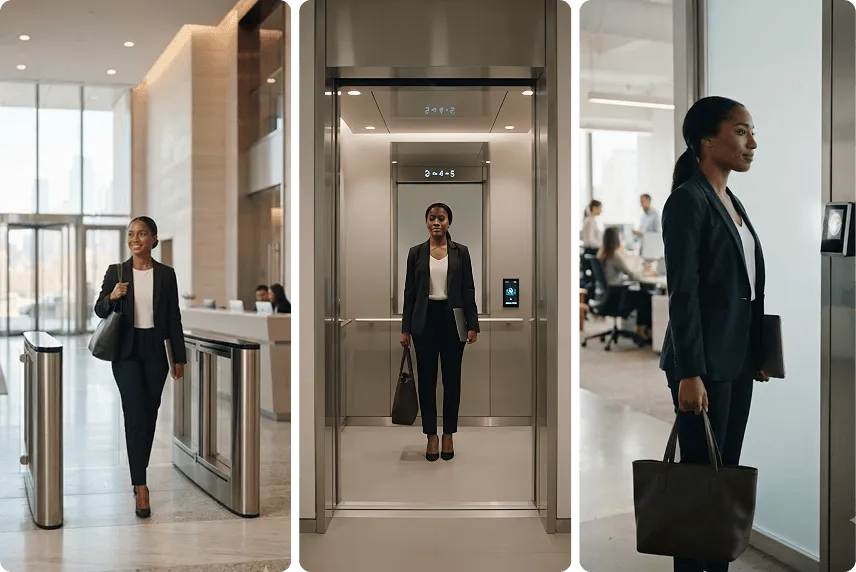
The missing owner
Security is workflow, integration, and control
Our work goes past reviewing access control vendors. We design how security operates across the whole building, then test and commission it, so you keep control of an open system instead of a set of disconnected boxes.
What that gives you
The gap on most projects
Access, video, elevators, and turnstiles each get bid and installed on their own. Nobody is accountable for the experience across them, so the workflow only gets tested after people move in.
The role we fill
We own the security software and integration layer end to end, and commission it against a plan written back in design. That continuity is where the depth lives.
Every user flow has a technology path beneath it
Read each step top down: the experience first, then the technology underneath it. One scan carries a person from the lobby to the desk.
- 01
Lobby turnstile
One face scan clears the turnstile.
Technology path
Base-building credential, matched in the facial-recognition database.
- 02
Elevator
The car is already going to the right floor.
Technology path
Destination dispatch issued from the home floor through integration middleware.
- 03
Office floor
The same face clears the office floor.
Technology path
Tenant credential on a separate access platform, reconciled with the base building.
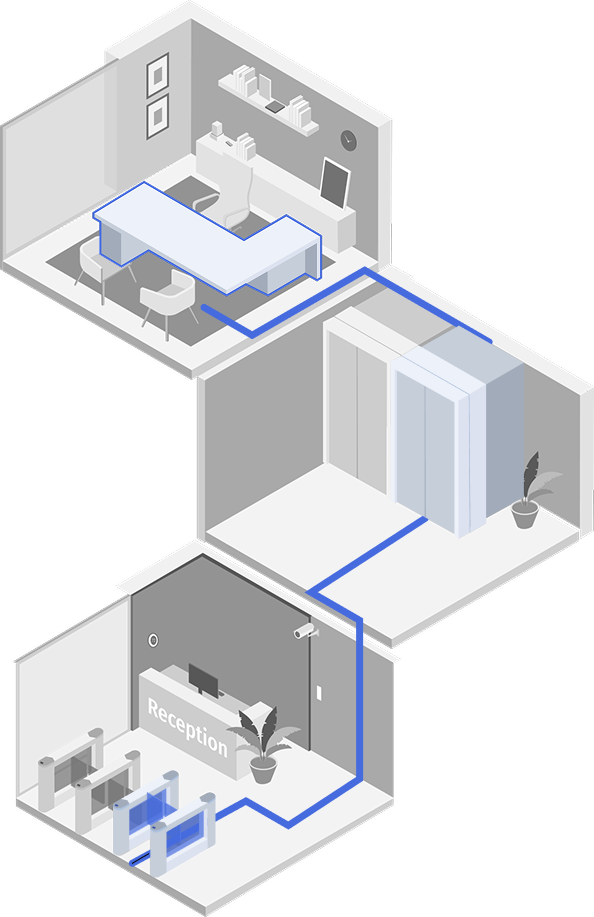
The scope we own
Engage us across all of it, or bring us in for a single decision. Either way, commissioning is tested against the plan written in design, across every user type: tenant, resident, visitor, vendor, and staff.
What we do at each phase
We support owners through construction and development by owning the software and integration layer, phase by phase. Engage us end to end, or at any single phase.
- 01
Design
Strategy and vision, software architecture, integration requirements, user flows, and a standards review.
- 02
Procurement
Bid specs and RFP requirements, vendor interviews, vendor leveling, and contract and legal support.
- 03
Legal & landlord
Smart-building fluency for negotiations, base-building integration coordination, and risk assessment.
- 04
Construction
RFI and submittal review, the commissioning plan, acceptance, and issue and site tracking.
- 05
Operations
Operating model, an analytics and reporting framework, and ongoing reporting after turnover.
Elevators can't be bid as a standalone package
For a mixed-use development, elevator technology has to be coordinated with security, destination dispatch, visitor management, and tenant, resident, and amenity access. We get integration and open-protocol language into the elevator contract before it is signed, while you still hold the leverage.
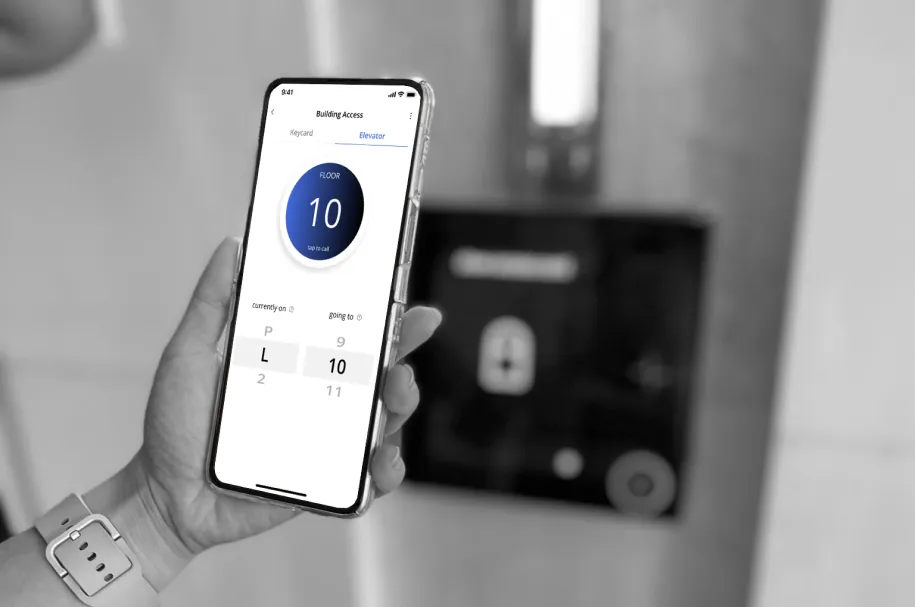
Destination dispatch
Integration requirements that route people to the right floor automatically.
Floor permissions
Credential-based access, with restrictions between users and after hours.
Turnstile to elevator
Workflows that carry a credential from the lobby into the car.
Commissioning scripts
Real scenarios, exception handling, and tests run at acceptance.
Owners need commercial control of their own technology
A future-ready building should not be locked to a single closed vendor stack. We help owners define commercially reasonable open-architecture requirements. The goal is not theoretical openness. It is practical owner control, operational flexibility, and less obsolescence.
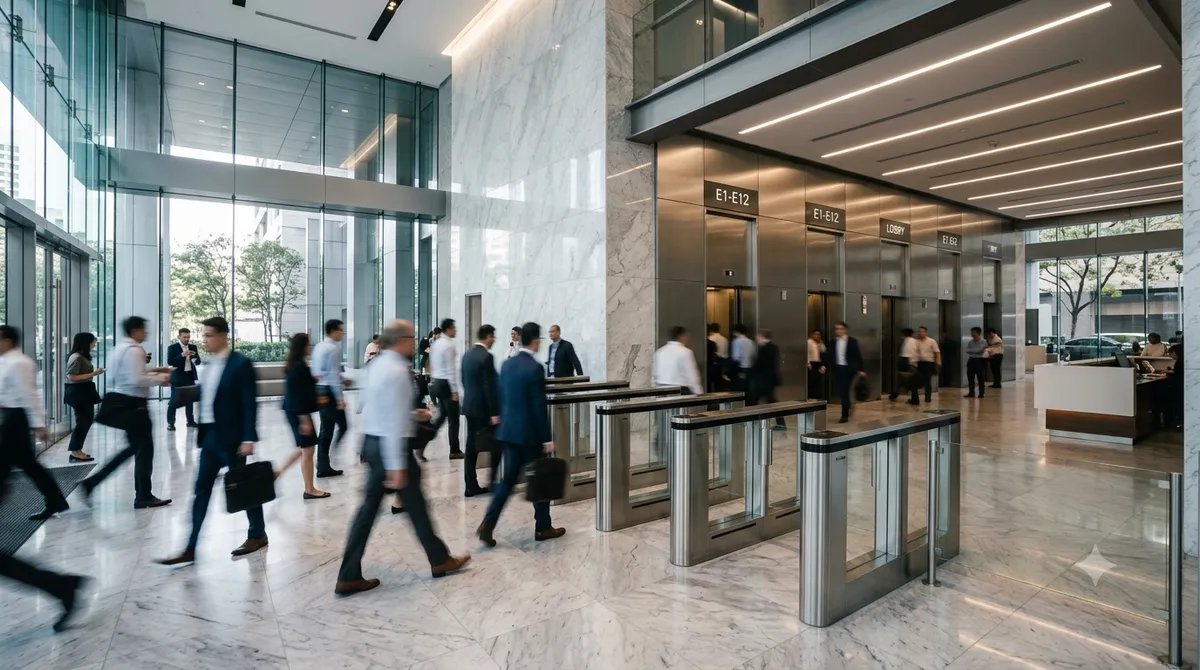
Documented interfaces
Real, non-proprietary interfaces, not a vendor portal as the only way in.
Data ownership
Clear access rights and exportable event and trend data you actually control.
Integration testing
Vendor participation in testing, with change control and support obligations after turnover.
Security boundaries
Cybersecurity and permission zones defined up front, not bolted on later.
Why timing matters
Catching it late is the expensive way
Both of these are avoidable with a test plan written in design and run at commissioning, the work the phases above describe.
20%+ added to cost
Problems found during construction trigger change orders and delays. Late discoveries can add a fifth or more to the technology scope.
Devices pass, the workflow still fails
Hardware gets commissioned and signed off while the experience a tenant or resident actually has still breaks, because no one tested the flow end to end.
One scan, lobby to desk, across two platforms
A midtown office tower needed a security flow where one credential carried a person from the street, through the turnstile and elevator, to a tenant floor, across a base building and a tenant access stack.
Talk to an advisorChallenge
Two access platforms, base building and tenant, plus destination dispatch, with no one accountable for the experience across them.
Solution
We redesigned the security flow around multi-credential access (facial, mobile, and card) and reconciled the two platforms so one scan works lobby to desk.

Result
1 scan
A single credential carries a person from turnstile to floor, commissioned and tested against the plan.
Security advisory questions
A consultant usually stops at the specification: pick a reader, set a budget, review the bids. We stay past that, owning the software and integration layer through construction, commissioning, and turnover, and we prove the workflow works before anyone moves in.
No. We stay vendor-agnostic. We design the architecture, write the specs, and commission the result, then you buy the hardware that fits the plan. That independence is the point.
No. We stay vendor-neutral by design. That is what lets us push for open interfaces and reconcile platforms instead of defending one.
Earliest is best, in design, when integration and open-protocol language can still go into the contracts while you hold the leverage. We also join mid-project or at operations to catch a workflow that was never tested.
No, but earlier is cheaper. We can still review the integration, credential format, and commissioning plan. Most late failures trace to a software or configuration detail, not the hardware itself, so there is usually room to fix the flow without ripping anything out.
Yes, when the two access platforms are reconciled and commissioned together. We have carried a single scan from a lobby turnstile through elevator dispatch to a tenant floor across two separate platforms.
We design for mixed credentials: mobile, card, and facial. The work is making them behave as one strategy across user types and readers, then testing that badging holds on both iOS and Android before turnover.
Hardware can be commissioned and signed off while the actual experience still breaks, because no one tested the path end to end. We test the flow, not just the boxes.
Yes. Network segmentation, permission zones, data retention, and export rights are part of the scope, defined up front rather than bolted on later.
Yes. The same integration and commissioning discipline applies across a portfolio, with standards that carry from one building to the next.
Prove the workflow before people move in
Bring us in on the whole build or a single decision. Either way, the flow gets tested against the plan.