


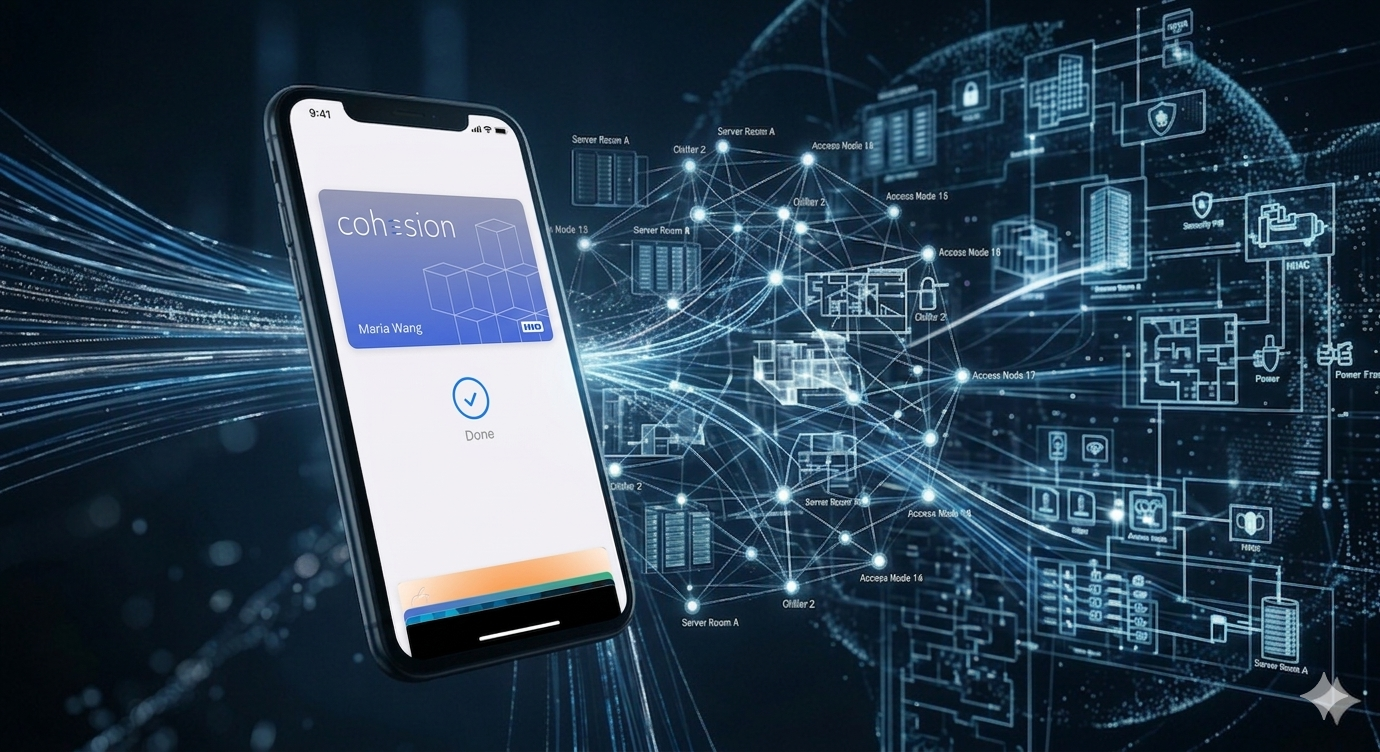

Digital wallets have become the headline in access control. Apple Wallet, Google Wallet, mobile credentials, tap-to-enter. It signals progress, but it also obscures where the real system risk lives. Most of the market is optimizing the interface. Very few are solving the underlying identity, integration, and audit problem. A digital wallet is just a container. It holds a credential. It does not define how that credential is provisioned, how permissions are governed, or how systems reconcile over time. That responsibility sits behind the wallet, in the identity model and the integration layer.
One of the more important signals to pay attention to right now is how platforms talk about integrations. There is a growing narrative around "free integrations" or unlimited connectivity. On the surface, that sounds attractive. In practice, it should raise a more technical question: what does "integration" actually mean?
A real integration is not a connector. It is a live, event-driven exchange between systems. When a user is created, updated, or terminated, that event propagates. When a clearance changes, it triggers downstream updates. When something fails, it is retried, logged, and reconciled. And critically, every step of that process is auditable. That level of rigor requires engineering, monitoring, version management, and accountability. It is not static work. It is ongoing operational infrastructure. If no one is investing in maintaining that exchange, you should ask what is actually being synced. There is a material difference between a one-time data push and a bidirectional, closed-loop integration. One sends data. The other confirms outcomes.
Without that, you get drift. Drift is when systems slowly fall out of alignment. One system reflects a current state. Another reflects a previous one. No one notices until there is a security incident or operational failure. Auditability has to exist across that entire exchange. You should be able to trace what system initiated a change, what data was transmitted, how it was processed, and what the final state is. If you cannot audit both sides, you do not have a reliable integration. This ties directly into identity and clearance management. Identity is not owned by one system. It is stitched together across systems. If integrations are weak, identity is inconsistent. A digital wallet without a strong integration and audit backbone is just a new interface on top of fragmented systems. A digital wallet backed by a structured, bidirectional, and auditable system becomes a control plane for identity across the building.
What is the difference between a mobile credential and a digital wallet platform?
A mobile credential is simply the digital version of a badge. A true digital wallet platform includes identity management, clearance logic, integrations, and auditability.
Why should free integrations raise questions?
Because real integrations require continuous maintenance, monitoring, and reconciliation.
What does two-way sync mean?
It ensures changes in one system are reflected and verified across all systems.
Why is auditability important?
It allows you to trace who had access, when, and why.
What is drift?
Drift occurs when systems fall out of sync, creating hidden risk.


