


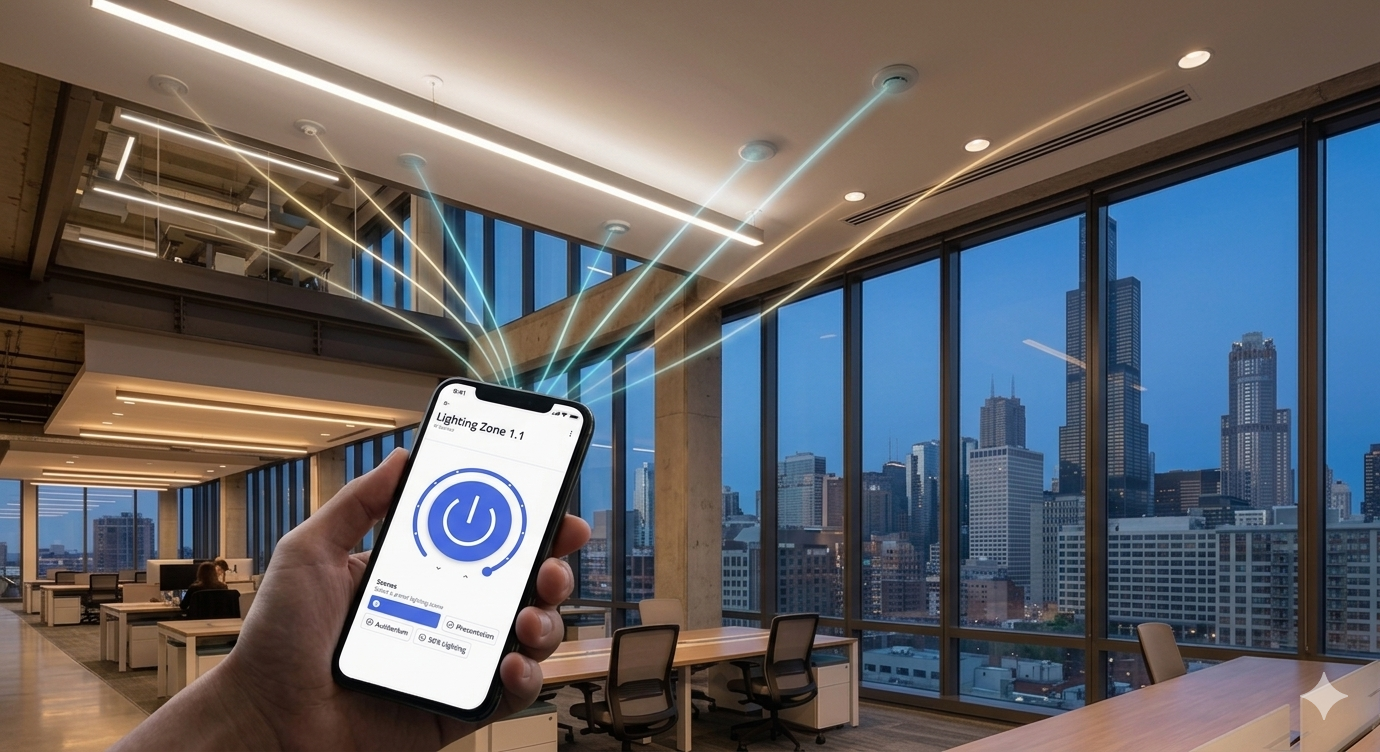

There's a growing expectation that building experiences should extend beyond access and into the environment itself, and while unlocking a door from your phone is becoming standard, the experience often stops there once you're inside.
Lighting, HVAC, and other systems still sit behind separate controls, disconnected from the digital layer that tenants are actually interacting with every day.
On the surface, adding lighting control to a mobile app feels like a straightforward feature where you can turn lights on or off, adjust a scene, and give tenants more control over their space, but like most things in buildings, the complexity isn't in the interface, it's in how systems connect behind it.
Lighting systems don't exist in isolation, since they're typically managed through BACnet and sit alongside HVAC, energy systems, and other building controls, and if lighting is treated as a standalone feature, it becomes just another disconnected layer.
When it's integrated properly, it becomes part of a unified operational system, and that distinction is what matters.
With BACnet-based lighting control integrated into the platform, the goal isn't just to let someone turn lights on from their phone, it's to connect lighting into the same system that manages identity, access, and building operations so that user actions and system behavior stay aligned.
From a tenant perspective, this shows up as convenience because you can control your space directly from the same app you use for access, without switching systems or relying on physical panels, but the more important shift is what happens behind the scenes once lighting becomes part of a connected system.
Because at that point, lighting can be tied to context, where access events can trigger lighting changes, scheduled occupancy can inform how lighting behaves, and space usage patterns can influence when and where lighting is activated.
This means lighting is no longer manually controlled or statically programmed but instead becomes responsive to how the building is actually used.
This is where the connection to Smart Maintenance becomes important, because once lighting is integrated at the system level, it's no longer just about control, it's about visibility.
You can start to see how systems are performing, identify anomalies, and respond before issues escalate, whether that's a fixture that isn't responding, a space that's consistently over-lit, or unexpected usage patterns.
Instead of reacting to tenant complaints or relying on manual inspections, teams can begin managing lighting more proactively.
It also reduces fragmentation across operations, since maintenance, engineering, and tenant experience teams are no longer working across separate systems but instead operating from a shared platform where actions, data, and outcomes are connected.
That's the difference between adding a feature and extending a system.
A mobile lighting control feature on its own can improve convenience, but without integration it doesn't change how the building operates, whereas when it's built on BACnet and connected into a broader platform, it becomes part of a larger shift toward unified building management.
The expectation is no longer just that tenants can control their environment, but that buildings can respond intelligently to how they're used.
And like everything else in this space, the interface is only part of the story, and the system behind it is what determines whether it actually works.
What does it mean to control lighting through BACnet?
BACnet is a standard protocol used by building systems to communicate with each other, which means lighting, HVAC, and other systems can be connected and managed within the same infrastructure. When lighting is controlled through BACnet, it allows it to be integrated into a broader system rather than operating as a standalone feature.
How is mobile lighting control different from traditional lighting systems?
Traditional lighting systems are often controlled through wall panels or separate interfaces, which makes them disconnected from other building systems, whereas mobile lighting control brings that functionality into the same app tenants use for access and other services, creating a more unified experience.
Why does integration matter for lighting control?
Without integration, lighting remains a siloed system that requires manual control or static programming, but when it's integrated into a broader platform, it can respond to events, user behavior, and building data, which allows it to function as part of a larger operational system.
How does this connect to Smart Maintenance?
When lighting is part of a connected system, it generates data that can be used to monitor performance, detect issues, and identify inefficiencies, which allows maintenance teams to respond proactively rather than waiting for problems to be reported.
Can lighting respond automatically to how a building is used?
Yes, once lighting is integrated with access and occupancy data, it can adjust based on real usage patterns, such as turning on when a space is accessed or adapting to scheduled activity, which makes the building more responsive and efficient.
What does this mean for building operators?
For operators, it reduces the need to manage multiple disconnected systems and allows them to oversee lighting, access, and operations from a single platform, which improves efficiency and makes it easier to scale across properties.


